Privacy
Moving from Compliance into Privacy: What Transfers and What You Must Relearn
Compliance and privacy share instincts but not substance. Here is which of your skills carry over intact, which privacy concepts you have to learn cold, and a realistic transition plan.
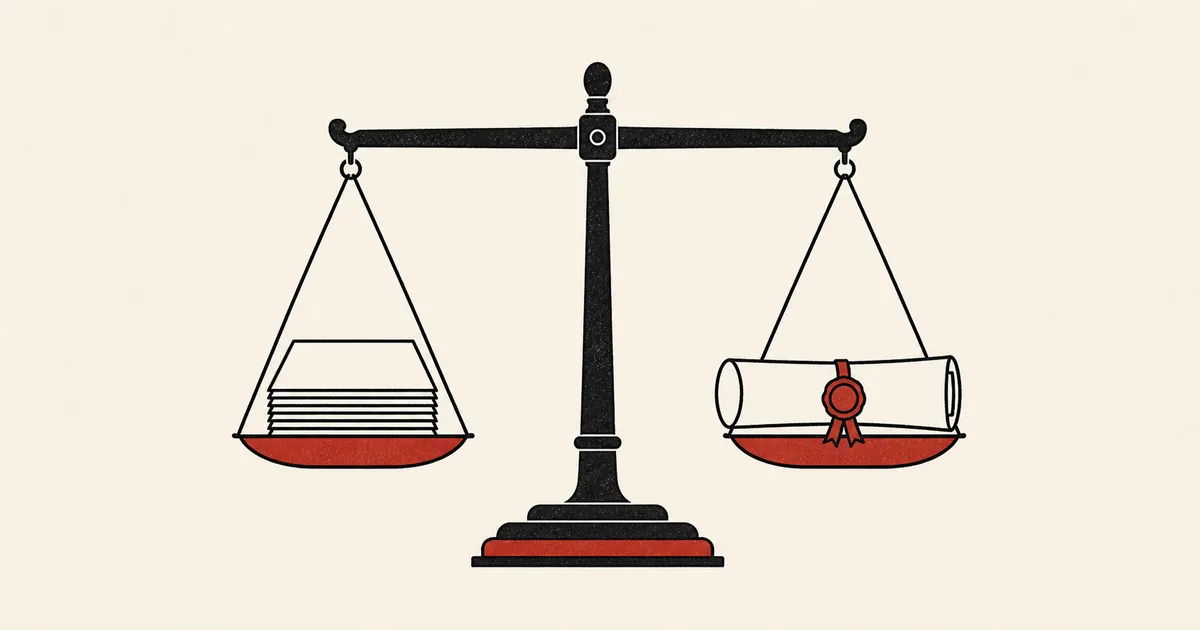
The move from compliance into privacy looks short from the outside. Both are control functions, both live near Legal, both are about doing the defensible thing under a regulatory regime. That overlap is real, and it is why the transition works. But it also hides a trap: the parts that feel familiar can lull you into thinking privacy is compliance with a new acronym set. It is not. Privacy has its own primary concepts, its own core artifacts, and a technical center of gravity that most compliance work does not touch. Knowing exactly what transfers and what you must relearn keeps you from bluffing in a role that punishes bluffing.
What transfers intact
More carries over than newcomers expect. Your instinct for reading a regulation and turning it into an operational requirement is the core skill of both jobs. Control design, evidence gathering, and the discipline of documenting why a decision was made all move across cleanly. If you have run a compliance program, you already understand risk assessment, the difference between a policy and a control, and how to work with a business that would rather you disappear.
The stakeholder and documentation skills transfer well, and they are undervalued. Privacy work is relationship work: you succeed by being the person Engineering and Marketing consult early rather than route around. Compliance teaches you to influence without authority, to write for auditors and executives, and to hold a line while staying useful. How much of the job that is depends on the role, privacy counsel, privacy engineering, and privacy operations weight it differently. Comfort with ambiguity helps too, because you will often reason from principles, though the legal and technical depth a role demands varies substantially by position and jurisdiction.
What you must learn cold
Here is the honest part: the substantive core of privacy is new, and you cannot fake it. Start with the concepts. You need a working grasp of personal data and its categories, including special or sensitive categories, and why the classification changes what you are allowed to do. You need to understand lawful bases for processing, purpose limitation, data minimization, and retention as operating principles rather than slogans. You need to know what a data subject right is, consent versus legitimate interest, and how cross-border data transfers are constrained.
Then the frameworks. GDPR is the reference model even if you never work with EU data, because it defines the vocabulary the field uses. The US picture is a patchwork: the CCPA and its CPRA amendments plus a growing set of state laws, each similar in spirit and different in detail. You do not need to memorize statute text, but you must be able to trace a data flow to the specific obligations it triggers.
Finally, the artifacts. Two are central to most privacy programs:
- Data mapping and records of processing (ROPAs). Privacy runs on knowing what data you hold, where it lives, why you have it, who you share it with, and how long you keep it. Under GDPR the Article 30 record-keeping duty has limited exemptions, but in practice this discovery-and-maintenance discipline is where new privacy hires spend their first months, and it has no clean compliance equivalent.
- The Data Protection Impact Assessment. A DPIA is a structured evaluation of a processing activity's risk to individuals; under GDPR it is required when processing is likely to result in high risk. Running one well requires the conceptual grounding above plus real engagement with how the product actually works.
That last point is the deeper shift. Privacy pushes you closer to systems than most compliance roles do. You will read data flow diagrams, question engineers about logging and third-party SDKs, and reason about pseudonymization and deletion at a technical level. You do not need to code, but you need enough fluency to ask precise questions and recognize an evasive answer.
A realistic transition plan
Give yourself a structured learning period before you expect to contribute at depth, and let its length reflect your prior experience, target jurisdiction, and privacy role. First, read GDPR straight through once, then a plain-language guide from a data protection authority to anchor the concepts. Second, learn the artifacts by doing: build a small data map for a process you already understand from your compliance work, and draft a practice DPIA against it. The reps teach more than the reading.
Third, use your compliance background as the bridge, not a disguise. In interviews and early on the job, be explicit about the line: "My control design and regulatory-interpretation skills transfer directly; I am building depth in data mapping and DPIAs." That honesty reads as competence, because anyone senior in privacy can tell within minutes whether you actually understand personal data or are pattern-matching from another domain.
The transition is very achievable, and compliance is one of the strongest backgrounds to come from. Just respect the parts that are genuinely new. Treat privacy as a discipline to learn rather than a rebrand of what you already do, and the credibility follows.