Audit
Which Organizations Are Most Trusted in Certified Internal Auditing?
Trust in internal audit certification is not a popularity contest. Here is how the IIA, ISACA, AICPA, and ACFE each earned their standing, and how to check any credential's trustworthiness yourself before you spend a year studying for it.
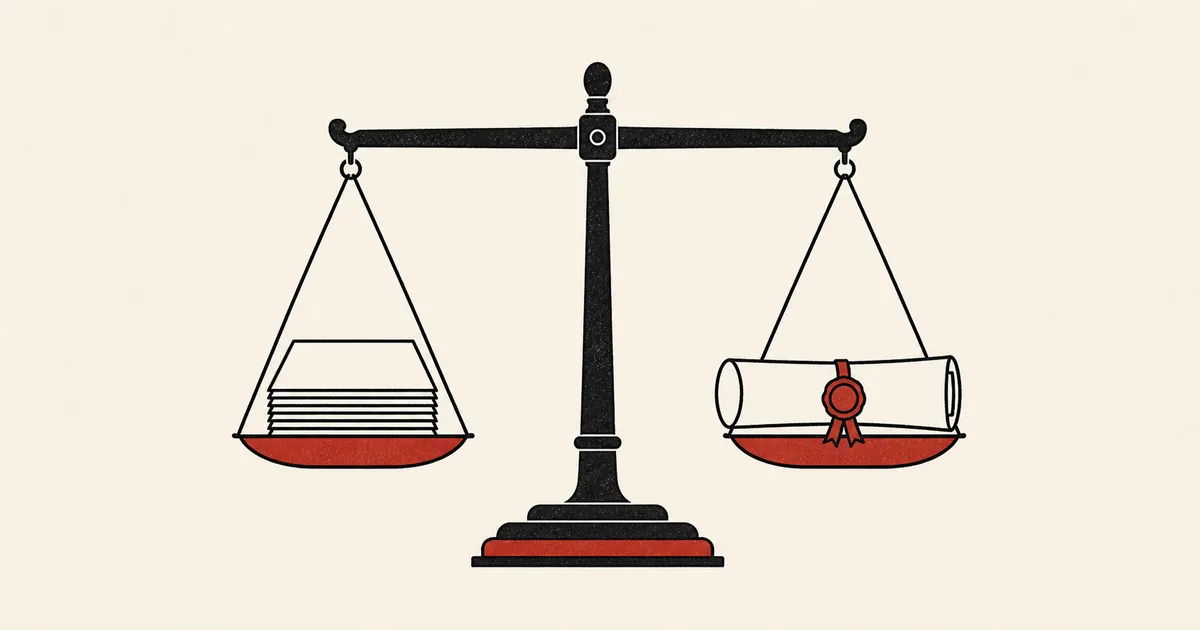
"Which organization is most trusted" is a strange way to ask a certification question, but it is the right one. Most people evaluating the CIA, CISA, or CFE start by comparing exam difficulty or salary bumps. That skips the part that actually determines whether a credential means anything to an employer: who stands behind it, how long they have stood behind it, and what happens when a member breaks the rules. A certification is only as trusted as the body that issues it, polices it, and keeps its standards current.
What "trusted" actually means for a certifying body
Trust in this context is not a vibe. It is a small number of checkable facts:
- **Standard-setting authority.** Does the organization write the standards the profession is measured against, or does it just administer an exam based on someone else's framework?
- **Longevity and track record.** How long has the body existed, and has it kept its content current as the profession changed?
- **Global reach.** Is the credential recognized only in one country, or does it travel across borders and regulatory regimes?
- **Enforcement.** Is there a real code of conduct with a disciplinary process, or is misconduct simply invisible once the certificate is issued?
- **Continuing education requirements.** Does the credential expire without upkeep, or is it a one-time exam that never has to be revisited?
Run any certifying body through those five questions and the picture becomes much clearer than "which logo looks more impressive on LinkedIn."
The IIA: the standard-setter for internal audit itself
The [Institute of Internal Auditors (IIA)](https://www.theiia.org/) is the closest thing internal audit has to a governing body, and it earns that position on more than brand recognition. The IIA writes the International Professional Practices Framework (IPPF), which includes the Global Internal Audit Standards that define what internal audit *is* as a discipline: independence, objectivity, risk-based planning, and the reporting relationship to a board or audit committee. When an internal audit charter references "professional standards," it is almost always referencing the IIA's framework, whether or not the auditor holds an IIA credential.
That authorship is what separates the IIA from a pure exam vendor. Other certifying bodies build credentials that test knowledge of a domain; the IIA built the domain's operating standards and then built a credential, the Certified Internal Auditor (CIA), around demonstrating fluency in them. The IIA also runs a global chapter network with local affiliates in over 170 countries, which matters for trust because it means the credential is not a single national artifact. A CIA earned in one country is recognized by audit committees and regulators in most others, because the underlying standards are the same set everywhere.
The IIA also enforces a code of ethics with a formal complaint and disciplinary process, and CIA holders must complete continuing professional education to keep the credential active. Both of those facts matter more than they sound: a credential with no enforcement mechanism and no renewal requirement is just a historical record that someone once passed a test.
ISACA: trusted specifically for the technology side of the audit
[ISACA](https://www.isaca.org/) does not compete with the IIA for authorship of internal audit standards generally, but it holds the equivalent position for IT audit and information systems governance. Its Certified Information Systems Auditor (CISA) credential is built around ISACA's own IT audit and assurance standards, and ISACA also publishes COBIT, a widely adopted framework for IT governance that many internal audit functions use directly when scoping technology risk.
ISACA's trust signal is domain-specific rather than profession-wide: when an internal audit role increasingly touches access controls, cloud configurations, change management, and data governance, the CISA is the credential that signals depth in exactly that territory, backed by an organization whose core output is IT governance and assurance guidance, not a general-purpose training vendor bolting on a technology module. ISACA runs its own global chapter network and CPE renewal requirement, which puts it on the same footing as the IIA on the longevity and enforcement criteria, just scoped to a narrower subject matter.
AICPA: trust built on financial-reporting rigor, not internal audit specifically
The [American Institute of CPAs (AICPA)](https://www.aicpa-cima.com/), now operating jointly with CIMA under the AICPA & CIMA umbrella, issues the CPA license, which is not an internal-audit-specific credential at all. It is a public-accounting license grounded in financial reporting, auditing standards for external audit, and tax. Its trust comes from a different source than the IIA's: state or jurisdictional licensing boards, high exam and experience bars, and a long history predating internal audit's emergence as a distinct profession.
For an internal auditor whose work is heavily financial, SOX testing, controls over financial reporting, work that supports the external audit relationship, the CPA signals a level of accounting rigor that neither the CIA nor the CISA claims to test. But it is worth being precise about what it does not signal: a CPA license alone says little about internal audit's risk-based planning approach, its governance reporting structure, or IT general controls. It is a trusted credential, but for a different center of gravity than the question "which organization is most trusted in internal auditing" is usually asking about.
ACFE: trusted for the fraud-adjacent slice of the work
The [Association of Certified Fraud Examiners (ACFE)](https://www.acfe.com/) issues the Certified Fraud Examiner (CFE) credential and, notably, co-develops fraud-related guidance with the IIA itself, including joint publications on fraud risk management. That collaboration is itself a trust signal: the IIA does not co-publish guidance with organizations it considers unreliable. The ACFE's authority comes from being the primary body dedicated to fraud examination specifically, with its own body of knowledge, a global membership network, and a renewal requirement tied to continuing education in fraud-specific topics.
For an internal auditor whose work regularly intersects with fraud risk assessment, investigations support, or forensic-adjacent testing, the CFE is the credential that names that specialization most precisely, the same way the CISA names the IT specialization.
How to judge a certifying body yourself, in five minutes
Before trusting anyone's ranking, including this one, run a certifying body through a short checklist:
1. **Read their code of ethics and ask what enforcement actually looks like.** Most credible bodies publish disciplinary actions or at least describe a formal complaint process. If you cannot find one, that is itself informative. 2. **Check who they publish standards with.** Cross-references and joint publications between bodies (the IIA and ACFE on fraud guidance is a clear example) signal mutual recognition among the organizations that matter most to each other. 3. **Look at the renewal requirement.** A credential that never expires and requires no continuing education is a weaker ongoing signal than one that does, because it does not confirm the holder's knowledge stayed current. 4. **Check the chapter or membership footprint.** A body with active chapters across dozens of countries has more skin in the game maintaining consistent global standards than one operating in a single market. 5. **Ask a hiring manager in the target function, not a general recruiter.** An internal audit director who screens CIA and CISA resumes weekly has a more current, specific answer than a general search result, because trust in these credentials is ultimately an employer judgment, not an abstract ranking.
The short answer
For internal audit as a profession broadly, the IIA is the most trusted organization, because it authored the standards the field is measured against, not just a test based on them. For the technology slice of the work, ISACA holds the equivalent position. For financial-reporting depth, the AICPA's CPA license carries the most weight, and for fraud-specific work, the ACFE does. None of the four is "more trusted" in a vacuum; each is the most trusted body for the specific slice of internal audit work its credential actually measures. Match the organization to what your audits actually cover, the same way you would match a certification to your job description, and the "which one is trusted" question mostly answers itself.