Governance
The Questions to Ask When Interviewing for a GRC Role
A governance, risk, and compliance function can hold real authority or exist to check a box. The interview is your best chance to tell which one you are joining.
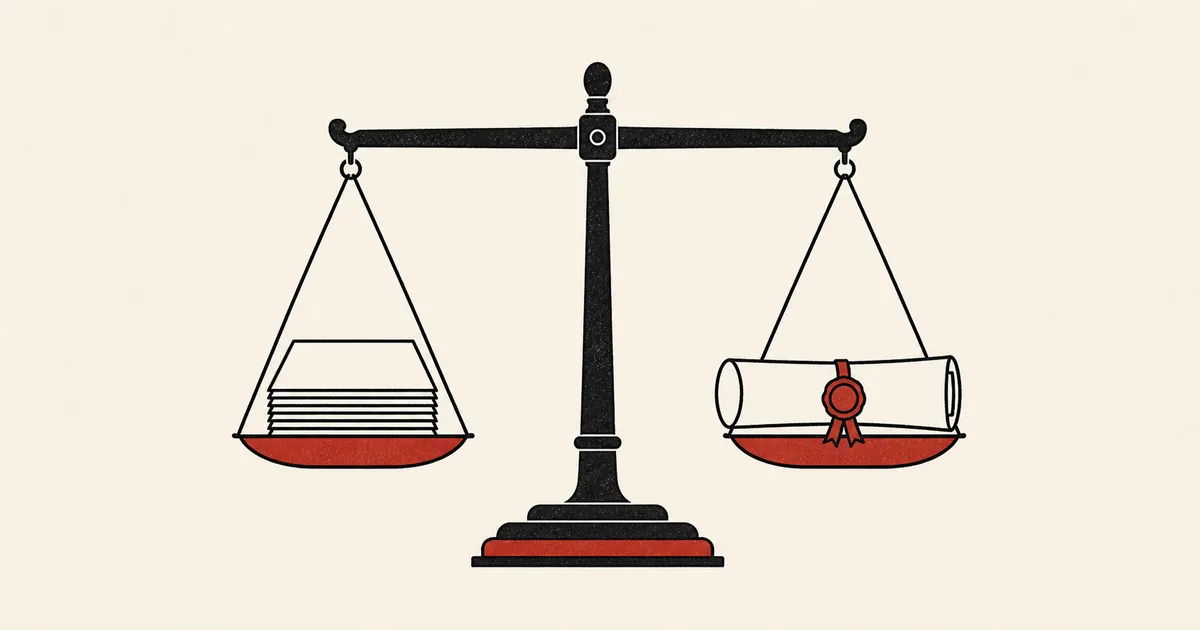
Two GRC roles can share the same title, the same salary band, and the same job description, and be completely different jobs. In one, the function has a direct line to leadership, a mandate the business respects, and the standing to say no. In the other, it exists to produce evidence for auditors and to absorb blame when something goes wrong. The posting will not tell you which you are looking at. The interview will, if you ask the right questions and listen carefully to how they are answered.
Authority and reporting lines
Start with where the function sits. Ask who the head of the function reports to, and whether that has changed recently. A compliance or risk lead reporting into the general counsel or directly to the board's audit or risk committee generally has more independence than one buried under the business unit they are meant to oversee. Reporting into the function they assess is a structural conflict, and it is worth naming.
Then ask what happens when the function disagrees with the business. Push for a specific example, not a policy statement. "We have an escalation process" tells you little. "Last year we blocked a vendor onboarding and here is how that played out" tells you whether the process has teeth. Listen for whether the function's position held, was overruled through a documented risk acceptance, or was quietly ignored. All three happen; only the first two indicate a healthy function.
Support and resourcing
A mandate without resources is a setup. Ask how the team is staffed relative to the scope it owns, and whether headcount has kept pace with the company's growth. A three-person team covering compliance, privacy, and vendor risk for a fast-scaling organization is not a team; it is a queue.
Ask about tooling and budget authority. Does the function decide how to spend its own budget, or does it request resources from the units it oversees? Where does its work sit relative to revenue-generating priorities when the two compete? You are trying to learn whether the function is treated as infrastructure the business depends on or as overhead to be minimized. The way an interviewer talks about the last budget cycle is often more revealing than any org chart.
Relationship with the business
The strongest GRC functions are neither adversaries nor rubber stamps. They are consulted early because teams find them useful. Ask when the business typically involves the function: at the design stage of a new product, or the week before launch when the work is already done. Early involvement signals that the business sees the function as a partner. Late involvement signals that it is a gate to be cleared.
A few questions that surface this quickly:
- When was the last time a business team came to you before they had to, and why?
- How do product or engineering teams describe working with your function?
- What is a control or requirement you have removed or simplified because it was not worth the friction?
That last question matters more than it looks. A function that has never retired a control is either brand new or is accumulating process for its own sake. A mature function prunes.
Metrics and what gets rewarded
Ask how the function's success is measured, and be alert to the answer. If the only metrics are audit findings closed and training completion rates, the role may be about producing evidence rather than reducing risk. Those numbers are easy to report and easy to game, and they say nothing about whether the organization is actually safer. Better answers connect the function's work to decisions the business made differently, incidents avoided, or risks brought within tolerance. You want to hear that someone above them cares about outcomes, not just activity.
Ask what happens after an incident or a failed control test. A blame-oriented culture treats these as failures of the function; a mature one treats them as information. The response to bad news tells you whether people will be honest with you once you are inside.
Closing
You are interviewing them as much as they are interviewing you, and GRC is a field where the wrong environment can stall a career or force you into work you did not sign up for. The check-the-box seat is not always obvious, because it often comes with a good title and a reasonable salary. What it lacks is standing. Ask about reporting lines, resourcing, when the business involves the function, and how success is measured. Then weigh the specifics of the answers, not the reassurances around them.